Governance and Economic

Millennium Group Corporation (Asia) Public Company Limited, or MGC-ASIA, operates under the principles of Good Corporate Governance (CG) with transparency, accountability, and auditability.
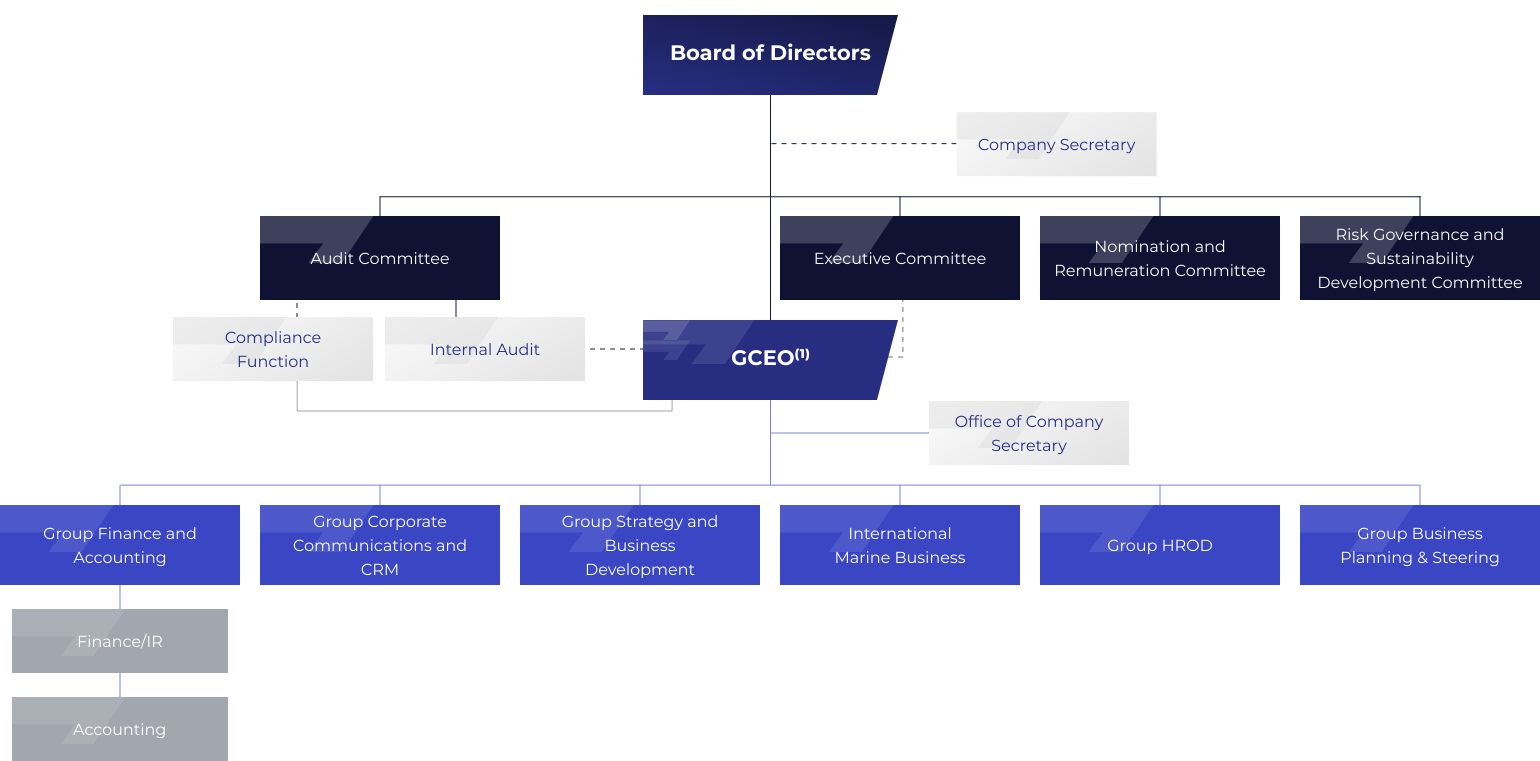
The company’s Board of Directors oversees the overall direction, strategy, risk management, and internal control systems. Sub-committees such as the Audit Committee, the Nomination and Remuneration Committee, the Executive Committee, and the Risk Governance and Sustainability Development Committee work together to address financial, operational, legal, and ESG-related matters. Furthermore, the company has established key governance policies, including policies on preventing conflicts of interest, related-party transactions, and anti-corruption measures, alongside a safe whistleblowing channel to foster an organizational culture committed to ethics and integrity.
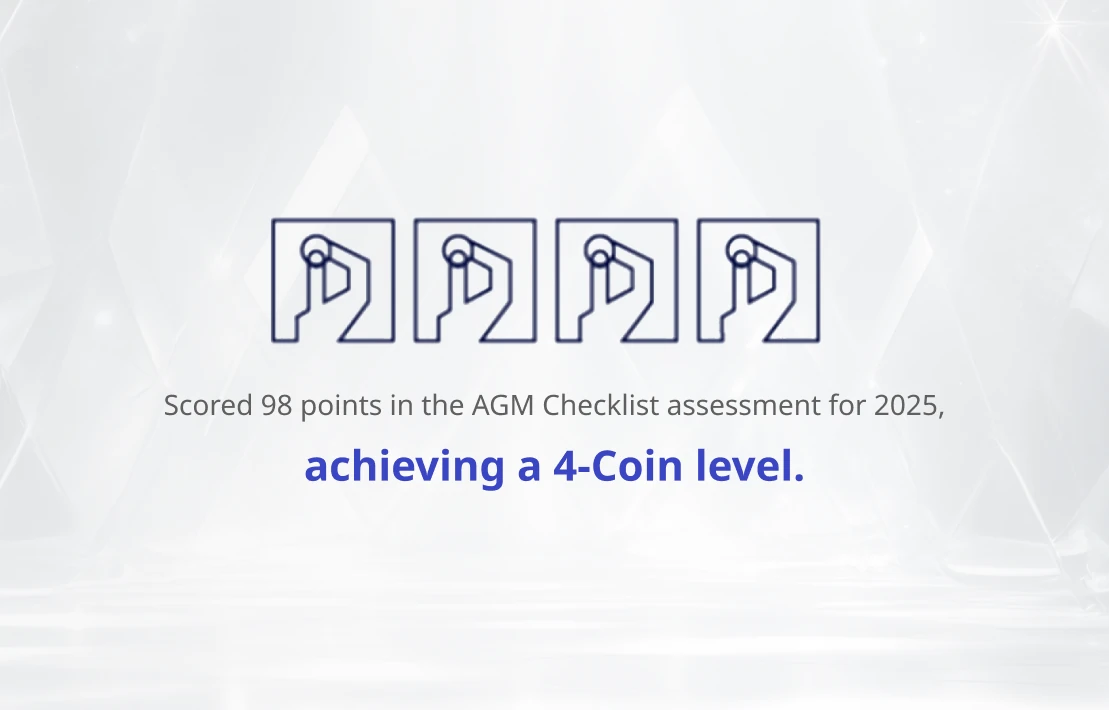
In the economic dimension, MGC-ASIA aims to create sustainable value through its comprehensive automotive business model, which includes the sale of international brand vehicles, after-sales services, car rental, chauffeur services, and related technology. This diversified revenue model reduces dependence on a single business and supports the Thai economy by creating jobs, developing employee skills, and providing opportunities for supply chain partners. The company maintains financial discipline and manages risks within an acceptable framework, reflecting the strength of its corporate governance system, as evidenced by its “Excellent – 5 Stars” CGR rating and a 98-point AGM Checklist score in 2025. This demonstrates the organization's commitment to operating transparently, with good governance, and achieving stable long-term growth.

Challenges and Opportunities
In an era of rapid change within the automotive and service industries, MGC-ASIA faces increasingly complex challenges in governance, particularly in adhering to capital market regulations, data management, internal controls, and international ESG standards. Additionally, the company operates within an ecosystem business model, which spans multiple business units,
requiring an elevated approach to subsidiary governance, risk management, and enhanced transparency in information disclosure. Stakeholders also have heightened expectations regarding governance, transparency, and corporate social responsibility, coupled with pressures from global economic conditions, high interest rates, industry competition, and the shift toward electric vehicles (EVs), all of which impact business stability and profitability. However, these challenges present opportunities for MGC-ASIA to strengthen its corporate governance (CG) system and improve its performance ratings, such as the AGM Checklist and CGR Checklist, both of which are crucial indicators in Thailand's capital market.
On the economic front, MGC-ASIA's ecosystem business model, which includes automotive sales, after-sales services, car rentals, financial services, insurance, and technology, remains a key foundation for sustainable growth. This model supports continuous revenue generation, risk diversification, and operational efficiency through digital technologies and data analytics, helping reduce costs, enhance agility, and improve data security. Furthermore, collaboration with global automotive manufacturers, financial institutions, and government agencies presents opportunities to drive innovation and raise industry standards in Thailand. All these efforts align with the United Nations' Sustainable Development Goals (SDGs), particularly in terms of transparent institutions, economic growth, and development partnerships, enabling MGC-ASIA to maintain a competitive edge and achieve long-term sustainability.
Sustainable Supply Chain Management



Sustainable Supply Chain Management System
MGC-ASIA has developed a sustainable supply chain management system that integrates ESG principles into its procurement processes, including supplier selection, performance measurement, monitoring, and evaluation of environmental, social, and governance (ESG) factors. The company promotes ethical business practices, safety standards, product quality, fair labor practices, and efficient resource usage among its suppliers.
A Supplier Code of Conduct has been established to guide the business conduct of suppliers, covering business ethics, anti-corruption, labor standards, human rights, workplace safety, environmental management, and transparency in governance. Suppliers are required to acknowledge, understand, and strictly adhere to this code. The Supplier Code of Conduct ensures that collaboration meets international standards while promoting responsibility and sustainability throughout the supply chain.
Supplier Selection
MGC-ASIA follows a structured process to screen and evaluate supplier risks systematically, ensuring a transparent, ethical, and sustainable supply chain. The process includes five key steps:

Both new and existing suppliers must adhere to the Supplier Code of Conduct and undergo evaluation using a Pre-qualification Questionnaire and ESG Self-Declaration to confirm their alignment with ESG principles.
The evaluation process involves a Supplier On-Site Assessment, covering four key dimensions: social, environmental, governance, and occupational health and safety. The assessment relies on ESG Self-Declarations and supporting documents. If a supplier's performance falls below the set standard, a Corrective Action Plan (CAP) is developed and closely monitored to ensure compliance with ESG principles, enabling long-term sustainable growth alongside the company.

Risk Assessment of Suppliers
MGC-ASIA evaluates supplier risks in four dimensions: social, environmental, governance, and occupational health and safety, based on documents and ESG Self-Declarations. Suppliers are rated as high, medium, or low risk. High-risk suppliers are subject to in-depth on-site assessments to identify root causes of issues and develop improvement plans. If improvement does not meet the required standards, further evaluation using a standard checklist will be conducted to determine the future course of business collaboration.
Corrective Action Plans
Results from the supplier evaluation lead to the development of improvement plans in collaboration with suppliers, outlining areas to be addressed, responsible parties, and timelines for execution. The company monitors progress continuously, and if a supplier remains high-risk or fails to meet ESG criteria within the set timeframes, reconsideration of future business collaboration or supplier registration may occur.

Supplier Development
MGC-ASIA promotes sustainable growth for suppliers by providing consultation, knowledge exchange, and support in ESG self-assessment, encouraging continuous improvement. This collaboration helps raise operational standards.
Cyber Security and Privacy Protection


Targets

Enhance cybersecurity readiness in line with international standards such as ISO/IEC 27001, 27701

Protect personal data of customers, employees, and partners to ensure safety and traceability

Effectively prevent data breaches and cyber threats

Enhance cybersecurity awareness and strengthen understanding of personal data protection in compliance with the Personal Data Protection Act (PDPA) for employees at all levels.
Performance

The Company strengthens cybersecurity awareness and promotes understanding of personal data protection in compliance with the Personal Data Protection Act (PDPA) across all employee levels. Training participation was as follows:
- 2024: 102 participants
- 2025: 157 participants, reflecting broader internal awareness and engagement.

Cybersecurity and Personal Data Protection Performance
| 2023 | 2024 | 2025 | |
|---|---|---|---|
| Number of cybersecurity incidents and cases of customer data breaches | 0 | 0 | 0 |
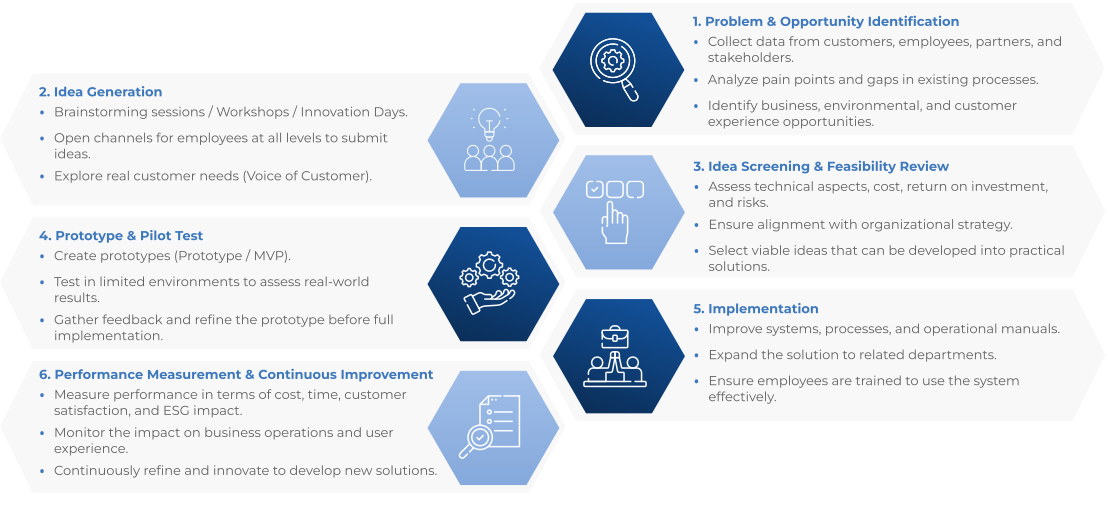
MGC-ASIA places the highest importance on cybersecurity and the protection of personal data to support technology-driven operations and safeguard customer information in the automotive industry. The company continually improves its information security management system, receiving international certifications for ISO/IEC 27001:2022 and ISO/IEC 27701:2019, which provide the framework for setting policies and control measures related to security. This includes access control, cybersecurity threat prevention and detection, incident management, and response and recovery plans. These efforts ensure that customers, partners, and stakeholders can safely and reliably use the company’s automotive services and digital platforms.
Regarding personal data protection, MGC-ASIA strictly adheres to the Personal Data Protection Act (PDPA), covering customer data from sales, after-sales services, service centers, and all digital systems. The company has appointed a Data Protection Officer (DPO) to oversee data processing activities across all departments, including controlling access rights, data backup and recovery, security event monitoring, managing external data processors, and measures to prevent data leaks. Additionally, MGC-ASIA has established policies and practices for employees to follow, including systems to handle data subject requests, such as access, correction, deletion, or withdrawal of consent. This demonstrates MGC-ASIA's commitment to transparent operations, respecting privacy rights, and securing data in accordance with international standards in all customer experiences.
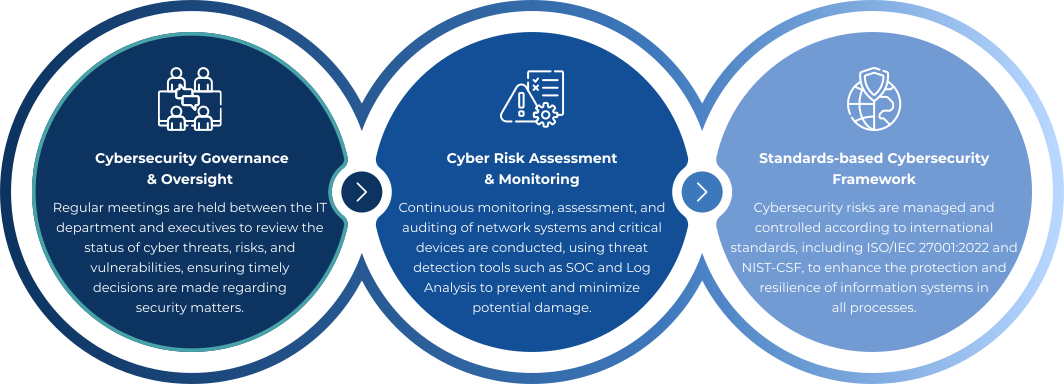
Innovation

Targets

Foster a culture of innovation within the organization by providing opportunities for employees at all levels to contribute to the development and improvement of work processes.

Support the adoption of new technologies to enhance service quality and customer experience.
Performance

Developed an application
for vehicle booking, service appointments, maintenance tracking, and after-sales services.


Developed the Vehicle Sales Management (VSM) system
an end-to-end vehicle sales management solution that ensures smooth and efficient operations.


Created the Red Plate Management System
which tracks and controls vehicle license plates, enhancing convenience and transparency in management.


Implemented the E-Travelling System
to record and manage employee travel data, calculating greenhouse gas emissions according to international standards to support the organization’s sustainability goals.


Enhancing Operational Excellence with AI and Power BI
The Company promotes AI capability building alongside the adoption of Power BI as a tool to improve work processes and data management. This strengthens analytical efficiency and supports management decision-making in a more systematic and data-driven manner

MGC-ASIA emphasizes the importance of fostering an innovation-driven culture by encouraging employees at all levels to contribute new ideas and improvements to work processes. This is facilitated through formal idea submission systems, innovation meetings, and creative activities. These ideas are developed into practical projects or innovations that can be implemented across the organization. Additionally, the company supports the development of knowledge and skills in technology and innovation, enabling employees to apply their learning to improve work processes effectively.
The company has incorporated digital technologies at various stages of customer service, including sales, appointments, maintenance tracking, and after-sales service through online systems to enhance convenience, transparency, and quick response to customer needs. Additionally, the company plans to introduce Chatbot and Voicebot systems to provide fast, continuous 24/7 service, alongside a customer data storage and analytics system to improve services tailored to each customer’s needs. Generative AI technologies are also being utilized to enhance communication capabilities, such as multilingual content production, avatar voiceovers, and subtitles, improving communication efficiency with both domestic and international customers.
Corporate Governance and Business Ethics



Targets

Sustain strong corporate governance standards as assessed by recognized corporate governance institutions/organizations.

Maintain a continuous “Zero Code of Conduct Violations” target, with zero (0) confirmed breaches of the Code of Business Conduct each year, covering directors, executives, and employees.
Performance

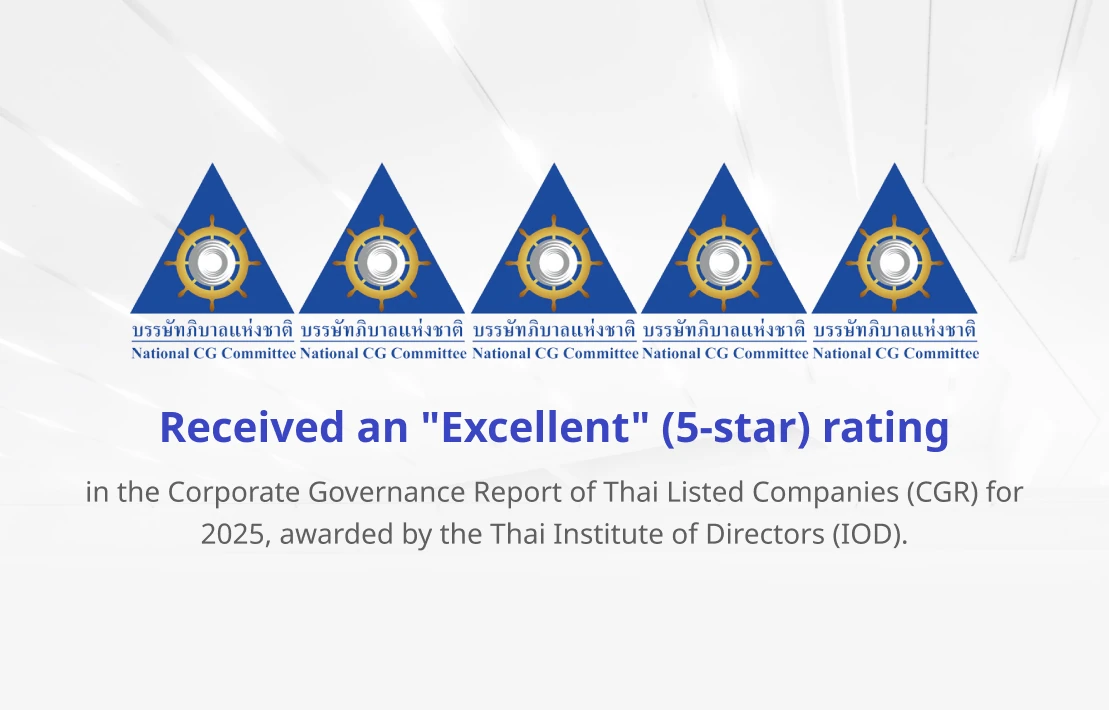
Received an
"Excellent" (5-star) rating
in the Corporate Governance Report of Thai Listed Companies (CGR) for 2025, awarded by the Thai Institute of Directors (IOD).

Scored
in the AGM Checklist assessment for 2025, achieving a
Certified as a
Member of the Thai Private Sector Collective Action Against Corruption (CAC)
Number of Confirmed Corruption Related Cases or Issues
| 2023 | 2024 | 2025 | |
|---|---|---|---|
| Number of Confirmed Corruption Related Cases or Issues | 0 | 0 | 0 |
Corporate Governance Structure
(as of December 31, 2025)
Additionally, the company has established a Corporate Governance policy and Anti-Corruption Policy, providing a clear framework for employees and stakeholders to make responsible decisions and carry out their duties in accordance with good governance principles and legal compliance.
The Company has implemented a Whistleblowing Policy, offering a channel through which stakeholders can report unethical behavior or misconduct. Reports made through this channel are appropriately protected, ensuring stakeholders feel confident in exercising their right to report grievances. This system also fosters transparent communication within the organization and encourages all parties to participate in maintaining ethics and integrity throughout the business processes.
Composition of the Board of Directors
Executive Directors


Non-Executive Directors
Independent Directors
Female Directors

The Board of Directors is responsible for overseeing the company’s operations in strict compliance with laws, objectives, and related regulations, for the benefit of the company, shareholders, and all stakeholders. Board decisions must adhere to principles of fairness, transparency, and accountability, especially when decisions may impact specific groups. Directors must consider all perspectives and make decisions based on fairness and the highest responsibility towards the company and shareholders.


Corporate Governance Principles and Business Code of Conduct
To align MGC-ASIA’s governance with good corporate governance principles and international standards, the company has established a Corporate Governance policy and Business Code of Conduct, along with other related policies and practices. These policies aim to promote transparent, ethical, and responsible operations that benefit all stakeholders, including shareholders, customers, employees, partners, and society at large.
The company has implemented a regular review and update process for these policies, conducted by the Board of Directors through the Risk, Governance, and Sustainability Committee, ensuring they remain relevant to the current circumstances. Furthermore, the related policies are available for download on the MGC-ASIA website and are communicated to all directors, executives, and employees via email, notice boards, and training sessions. All employees are required to sign an acknowledgment and strictly adhere to these policies.

Employee Misconduct Handling Procedures
MGC-ASIA is committed to fostering a culture of transparency and ethics within the organization. The company has established clear procedures for handling misconduct or violations, whether it involves breaking the law, policies, or the Business Code of Conduct. When misconduct is identified, employees will be processed according to the defined procedures, taking into account appropriateness based on good governance principles.
If employees or executives observe misconduct, corruption, or violations of the law or business ethics, or witness unethical behavior or policy violations, they are encouraged to report it through the designated whistleblowing channels. The company also ensures the protection of whistleblowers from retaliation or rights violations, creating confidence in the investigation process, ensuring fairness, and maintaining transparency throughout the inquiry.
Risk and Crisis Management

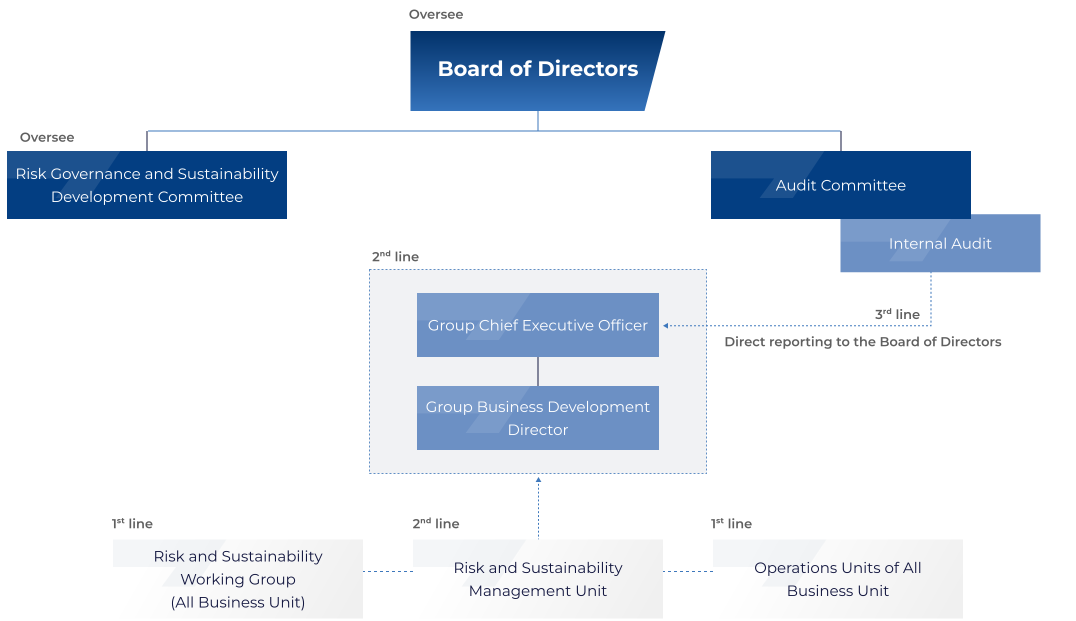
MGC-ASIA has a clear and systematic risk governance framework that aligns with business strategies, acceptable risk levels (Risk Appetite), and long-term sustainability goals. The company manages risks across five main areas: strategic risk, operational risk, financial risk, legal compliance risk, and emerging risks, considering external factors such as economic conditions, social issues, climate change, technology, and industry competition. This approach ensures effective risk control. The company and its subsidiaries have established a risk appetite and tolerance framework, as well as risk limits, to keep risks within appropriate and transparent levels.
Risk governance operates within a clear structure, with the Risk, Governance, and Sustainability Committee overseeing, monitoring, and providing recommendations to management. Regular reports are made to the Audit Committee and Board of Directors. Executives at all levels are responsible for managing risks at both the organizational and operational levels. Employees are also encouraged to be aware of and strictly adhere to the risk management processes. This structure ensures the company can manage risks systematically, building confidence among stakeholders and supporting sustainable long-term business growth.
Enterprise Risk Management (ERM)
MGC-ASIA applies the Enterprise Risk Management (ERM) process using the COSO ERM 2017 framework to effectively manage risks across all areas of operations. The focus is on the following key components:

Governance and Culture
- Establish clear governance processes.
- Promote a risk-aware culture at all levels of the organization.

Strategy and Objective Setting
- Plan strategies for risk management.
- Develop strategies aligned with acceptable risk levels.

Performance
- Define and assess risk levels.
- Prioritize impacts and opportunities.

Review and Improvement
- Conduct regular reviews.
- Reassess risk management to make corrections and improvements.

Communication and Reporting
- Apply information technology to manage risks.
- Communicate and report risk information to relevant stakeholders appropriately.
Performance

Fostering a Risk Culture
The Company fosters a risk culture by providing risk management training and communication across the organization, covering participants from the Board of Directors and executives to managers/supervisors and operational staff.
- In 2024, training participants included 5 Board members, 32 executives, 68 managers, and 6 operational staff, totaling 111 participants.
- In 2025, training participants included 2 executives, 1 manager, and 13 operational staff, totaling 16 participants.