
Materiality Assessment
The Company conducts a sustainability materiality assessment on an annual basis.The assessment considers both internal and external factors, including stakeholder expectations,under the double materiality principle.
It covers material topics across the economic, social, and environmental dimensions that may have significant impacts on (i) the Group’s business operations and performance and (ii) stakeholders across the value chain. The results are used to inform the Group’s sustainability strategy and implementation, ensuring alignment with the business context and the Company’s enterprise risk management. Under the double materiality principle, the assessment considers:
- the impact of ESG issues on the Group’s business operations and financial performance; and
- the impact of the Group’s business activities on the economy, society, the environment, and stakeholders. Accordingly, the Company’s materiality assessment process is as follows:

Understanding the Organizational Context

Identifying Actual and Potential Impacts

Assessing the Significance of Impacts

Prioritizing Material Topics

Double Materiality Matrix
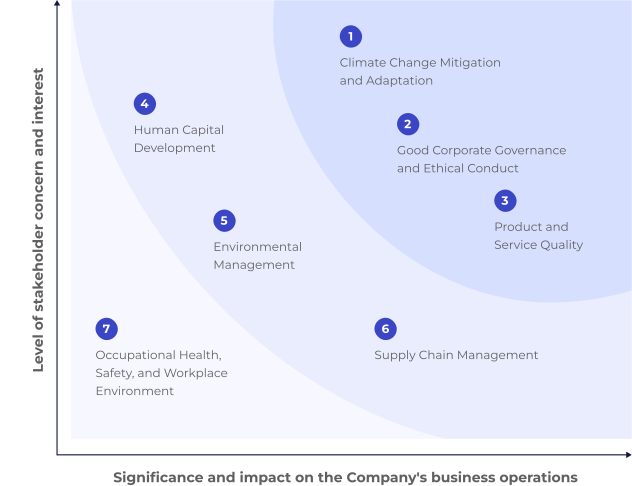
High-Priority Issues
- Climate Change Mitigation and Adaptation
- Product and Service Quality
Medium-Priority Issues
- Human Capital Development
- Environmental Management
- Supply Chain Management
Low-Priority Issues
- Good Corporate Governance and Ethical Conduct
- Occupational Health, Safety, and Workplace Environment
Based on the Group’s double materiality analysis of strategically significant topics, considering both the impact on business performance and value creation, as well as the significance of impacts on stakeholders, society, the economy, and the environment, the MGC-ASIA Group remains committed to advancing its sustainability agenda. The Group is placing increased emphasis on material impact areas in alignment with automotive and mobility industry trends and the evolving expectations of stakeholders across the value chain.
The assessment results indicate that respect for and promotion of human rights across the value chain, sustainable energy strategy, human capital development and employee well being, risk management, and occupational health and safety (OHS) are material issues from both business and stakeholder perspectives. The Company is committed to integrating these priorities into its core strategy and operations to strengthen organizational resilience, enhance competitiveness, and support sustainable long term growth.
